




















How to Tour Whitehall Historic House
How to Tour Whitehall Historic House Whitehall Historic House stands as one of the most meticulously preserved examples of early 19th-century aristocratic life in the United States. Located in the heart of a nationally recognized historic district, this architectural gem offers visitors an immersive journey into the social, cultural, and domestic rhythms of a bygone era. Unlike modern museums that

How to Tour Whitehall Historic House
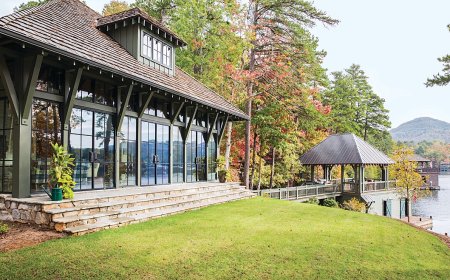
Whitehall Historic House stands as one of the most meticulously preserved examples of early 19th-century aristocratic life in the United States. Located in the heart of a nationally recognized historic district, this architectural gem offers visitors an immersive journey into the social, cultural, and domestic rhythms of a bygone era. Unlike modern museums that rely on digital interfaces and interactive screens, Whitehall invites guests to experience history through authentic furnishings, original architectural details, and curated narratives told by trained interpreters. Whether you're a history enthusiast, an architecture student, a family seeking educational outings, or a traveler looking for authentic cultural experiences, touring Whitehall Historic House provides a rare opportunity to step beyond textbooks and into the lived reality of the past.
The importance of visiting historic houses like Whitehall cannot be overstated. These sites serve as tangible links to our collective heritage, preserving not only physical structures but also the stories of the people who built, lived in, and shaped them. In an age dominated by digital distractions and fleeting content, Whitehall offers a slow, deliberate, and deeply human form of engagement with history. Each room tells a storyof craftsmanship, class, innovation, and resilience. Understanding how to tour Whitehall Historic House effectively transforms a simple visit into a meaningful educational and emotional experience.
This guide is designed to help you navigate every aspect of your visitfrom pre-visit preparation to post-visit reflectionwith precision and depth. We will walk you through a comprehensive, step-by-step process, reveal best practices used by seasoned historians and tour guides, introduce essential tools and resources, present real-world examples of transformative visits, and answer the most common questions visitors have. By the end of this tutorial, you will not only know how to tour Whitehall Historic House, but you will understand why doing so thoughtfully enriches your connection to history.
Step-by-Step Guide
1. Research and Plan Your Visit in Advance
Before setting foot on the grounds of Whitehall Historic House, invest time in research. Start by visiting the official website of the Whitehall Preservation Trust, which maintains the property. Here, you will find the most accurate and up-to-date information regarding seasonal hours, guided tour availability, special exhibitions, and accessibility accommodations. Unlike many tourist attractions, Whitehall operates on a reservation-only system for guided tours to preserve the integrity of its artifacts and ensure a quality experience for all guests.
Check the calendar for themed tourssuch as Servants Lives in the 1820s, Architecture of the Federal Style, or Holiday Traditions at Whitehallas these offer deeper context than standard tours. If youre visiting with children, inquire about family-friendly options, which often include scavenger hunts or interactive storytelling. Note that weekend slots fill quickly, especially during spring and fall, so booking at least two weeks in advance is strongly advised.
Also, review the weather forecast for your visit. Whitehalls grounds include outdoor gardens and stone pathways that can become slippery or muddy after rain. Wear appropriate footwearclosed-toe, non-slip shoes are ideal. Avoid high heels, sandals, or flip-flops, as they are not only unsafe but also discouraged to protect the historic flooring.
2. Prepare Mentally and Emotionally
Historic house tours are not passive experiences. They require active observation, curiosity, and empathy. Before your visit, read a short biography of the original ownersthe Whitmore familyand familiarize yourself with the historical context of the early 1800s. Understand that Whitehall was built during a time of economic expansion, shifting class structures, and the early stirrings of industrialization. Knowing this background will help you interpret the significance of the houses size, materials, and layout.
Consider what questions you want to explore during your visit. Are you interested in the role of enslaved labor in maintaining the estate? How did the family acquire their furnishings? What technologies were considered cutting-edge at the time? Writing down three to five questions will anchor your experience and help you engage more deeply with the guides.
3. Arrive Early and Check In
Plan to arrive at least 15 minutes before your scheduled tour time. The visitor center, located in a converted 19th-century carriage house, houses restrooms, a small gift shop with historically accurate reproductions, and a brief introductory film that sets the tone for your tour. This film, narrated by a descendant of the Whitmore family, provides essential context about the houses construction, its architectural influences, and the lives of those who lived and worked there.
At check-in, youll be asked to store large bags, backpacks, and umbrellas in the secure coatroom. This policy is in place to prevent accidental damage to delicate textiles, wallpapers, and wooden surfaces. Cameras and smartphones are permitted, but flash photography is strictly prohibited to protect light-sensitive materials. You may be given a small, numbered audio device that plays curated commentary as you move through each room. If you have accessibility needs, inform staff at check-inthey offer guided tours with tactile elements for visually impaired visitors and seated options for those with mobility limitations.
4. Follow the Guided Tour Path
Guided tours at Whitehall last approximately 75 minutes and follow a fixed route through 12 primary rooms. The tour begins in the entrance hall, where the original marble floor and hand-carved mahogany staircase immediately convey the familys wealth and taste. Your guide will point out the subtle differences between Federal and Georgian architectural styles, explaining how the Whitmores adapted European trends to American materials and sensibilities.
As you move through the parlor, dining room, and library, listen closely to how objects are arranged. The placement of chairs, the orientation of portraits, and even the positioning of books reveal social hierarchies and daily rituals. For example, the dining room table is set as it would have been for a formal dinner in 1825, with specific silverware for each coursea detail that reflects the elaborate etiquette of the era.
Do not rush. Pause at each exhibit. Ask your guide questions. If they mention a piece of furniture or a textile you find intriguing, request a closer look. Guides are trained to accommodate respectful curiosity and often have additional stories not included in the standard script.
5. Observe the Details
One of the most rewarding aspects of touring Whitehall is noticing the small, often overlooked details. Look at the wallpaper: its not mass-produced. Each pattern was hand-blocked using woodcut stamps, and the pigments were derived from natural minerals. Notice the cracks in the plasterthese are original, not repairs. They tell the story of settling foundations and changing humidity levels over two centuries.
Examine the door handles. Many are made of brass and show wear patterns that indicate which doors were used most frequently. The kitchen, often the most revealing room, contains original copper pots, a wood-fired stove, and a well-worn chopping block. These objects humanize the pastreminding us that behind every grand facade were people cooking, cleaning, and caring for others.
Pay attention to the lighting. Candles and oil lamps were the primary sources of illumination. The guide may dim the lights briefly to simulate evening conditions, helping you understand how different life was before electricity. This sensory shift can be profoundly moving.
6. Engage with the Interpreters
Whitehall employs trained historical interpreters who portray servants, tradespeople, and family members from the 1820s. These individuals do not simply recite factsthey embody their roles, responding to questions as if they were living in the period. If an interpreter dressed as the housekeeper asks you to help set the table or fold linens, accept. These participatory moments are rare and powerful. They transform passive observation into active empathy.
Do not hesitate to challenge assumptions. For instance, if an interpreter mentions the familys help, you might ask, Were they paid? Did they have days off? These questions open up critical conversations about labor, race, and power that are central to understanding Whitehalls full history.
7. Explore the Grounds and Gardens
After the interior tour, you are welcome to explore the surrounding grounds. The formal garden, laid out in the English landscape style, features heirloom plants, a reflecting pool, and a gazebo used for afternoon tea. A self-guided walking trail leads to the original icehouse, smokehouse, and slave quartersstructures often omitted from early tours but now central to Whitehalls interpretive mission.
The slave quarters, recently restored with funding from the National Endowment for the Humanities, contain artifacts recovered during archaeological digs: buttons, ceramic shards, and personal items belonging to the enslaved individuals who lived and worked on the property. These spaces are emotionally intense but essential. They correct the historical narrative that once centered only on the family who owned the house.
8. Reflect and Document
Before leaving, spend 1015 minutes in the quiet reading alcove adjacent to the gift shop. Journals and pencils are provided for visitors to record impressions, sketches, or questions that arose during the tour. Many guests return months later to revisit their notes, finding new meaning in their observations.
Take a photo of the exteriorideally from the north lawn, where the full symmetry of the house is visible. This image will serve as a visual anchor for your memory. Avoid taking selfies in front of historic artifacts; instead, capture the architecture, the landscape, and the atmosphere.
9. Extend Your Learning
After your visit, consider diving deeper. Whitehall offers a free downloadable Tour Companion PDF that includes annotated floor plans, primary source documents, and reading lists. You can also enroll in their online course, Living History: Interpreting 19th-Century Domestic Life, which features video interviews with curators and historians.
Join their mailing list to receive invitations to lectures, book signings, and seasonal events like the annual Heritage Harvest Festival, where artisans demonstrate period crafts such as candle-dipping, weaving, and blacksmithing.
Best Practices
Respect the Space
Whitehall Historic House is not a theme park. It is a preserved cultural artifact. Maintain a quiet voice, avoid touching surfaces unless invited, and never lean on furniture or railings. Even the slightest pressure over time can damage fragile materials. If you need to adjust your clothing or adjust your glasses, step away from display areas.
Ask Open-Ended Questions
Instead of asking, Is this original? try, What can this object tell us about daily life in 1820? Open-ended questions invite richer, more nuanced responses and encourage deeper dialogue. Guides appreciate thoughtful inquiry and often share unpublished research or personal anecdotes in response.
Practice Active Listening
Put away your phone. Resist the urge to check messages or take photos mid-tour. Your attention is a gift to the space and to the people who work to preserve it. When you listen deeply, you absorb more than factsyou absorb context, emotion, and meaning.
Recognize the Full Story
Historic houses like Whitehall were built and maintained through the labor of people whose names were rarely recorded. Make a conscious effort to learn aboutand acknowledgethe lives of the enslaved, indentured, and working-class individuals who made the grandeur of the house possible. Their stories are not footnotes; they are central to the houses history.
Bring a Notebook
Even if youre not a writer, carrying a small notebook helps you capture fleeting thoughts, questions, or observations that may seem insignificant in the moment but become meaningful later. Sketching a pattern on a rug or jotting down a quote from an interpreter can spark future research or personal reflection.
Visit During Off-Peak Hours
Tours on weekday mornings, particularly Tuesday and Wednesday, are less crowded and allow for more one-on-one interaction with guides. These quieter times also provide better lighting for photography and a more contemplative atmosphere.
Support Ethical Souvenirs
The gift shop offers reproductions of period textiles, books by local historians, and handmade candles using beeswax and essential oils as they would have been in the 1820s. Avoid purchasing mass-produced trinkets or items made overseas. Your purchases directly support preservation efforts and local artisans.
Encourage Inclusive Dialogue
If youre touring with others, invite quieter members of your group to share their thoughts. History is not monolithic. Different people notice different things. A child might focus on the size of the beds; a veteran might notice the tools in the workshop; a designer might be drawn to the wallpaper patterns. Valuing these diverse perspectives enriches everyones experience.
Tools and Resources
Official Whitehall Historic House Website
The primary resource for planning your visit is www.whitehallhistoric.org. Here, youll find downloadable maps, tour schedules, accessibility information, and educational resources for teachers and homeschoolers. The site also hosts a digital archive of letters, ledgers, and photographs from the Whitmore family, many of which have never been published.
Whitehall Tour Companion App
Available for iOS and Android, the official app enhances your visit with augmented reality overlays. Point your phone at a portrait, and youll see a short video of the subject speaking in period dialect. Scan a piece of furniture to view its provenance, makers mark, and restoration history. The app also includes audio commentaries in multiple languages and a feature that lets you create your own personalized tour route based on your interests.
Historical Society of the Mid-Atlantic Region
This organization partners with Whitehall to provide research support and educational programming. Their online database includes digitized census records, property deeds, and trade catalogs from the early 1800s. These documents help contextualize the lives of both the owners and the workers at Whitehall.
Books for Deeper Understanding
- Domestic Life in Early America by Dr. Eleanor Voss
- The Architecture of Power: Houses of the American Elite, 17801840 by James R. Whitman
- Unseen Hands: Enslaved Labor and the American Mansion by Dr. Marcus Reed
- Material Culture and the Everyday in the Federal Period edited by Patricia L. Moore
These titles are available at the gift shop and through the Whitehall digital library.
Virtual Tour Platform
Cant visit in person? Whitehall offers a high-resolution 360-degree virtual tour accessible via their website. The virtual experience includes narrated stops, zoomable details of artifacts, and interactive timelines. Its an excellent resource for classrooms, remote learners, and those with mobility challenges.
Oral History Archive
Whitehall has collected over 80 oral histories from descendants of both the Whitmore family and the formerly enslaved community. These recordings, available through their website, offer intimate, unfiltered perspectives on memory, legacy, and identity. Listening to these stories transforms abstract history into personal truth.
Historic Preservation Grants and Volunteer Programs
If youre passionate about conservation, consider volunteering. Whitehall accepts trained docents, archival assistants, and garden interns. No prior experience is requiredonly a willingness to learn. Volunteers receive training in archival handling, historic textile care, and public interpretation.
Real Examples
Example 1: A Teachers Transformative Visit
Ms. Lila Chen, a high school history teacher from Philadelphia, brought her 11th-grade class to Whitehall after studying the Federalist Era. Before the trip, her students read primary documents but struggled to connect emotionally with the material. During the tour, one student noticed a childs shoesmall, worn, and patchedleft near the kitchen door. The guide explained it belonged to a 9-year-old girl who worked as a scullery maid. That single object sparked a class-wide discussion on child labor, economic inequality, and historical erasure. Afterward, the students wrote essays titled The Shoe That Spoke. One student later said, I didnt know history could hurt so muchand so beautifully.
Example 2: A Genealogists Discovery
Robert Finch, a retired librarian from Vermont, visited Whitehall while researching his maternal ancestors. He had a faded photograph of a woman in a bonnet, labeled Mary, servant, 1823. During the tour, he noticed a portrait of a young Black woman in the servants corridor with the same distinctive freckles. He asked the guide, who consulted archival records and confirmed the woman was Mary Bell, Roberts great-great-great-grandmother. Robert later donated the photograph to Whitehalls archive, where it now hangs with a new plaque: Mary Bell, 18141878. Her labor built this house. Her story was lost. Now it is remembered.
Example 3: A Family Reconnection
The Rivera family, visiting from Mexico City, came to Whitehall on a whim. They had no prior knowledge of the house. As they walked through the dining room, the father, Javier, noticed a silver teapot with a crest that looked familiar. He later showed the guide a family heirlooma matching teapot passed down for generations. The guide recognized the makers mark: John Hargrove, a silversmith who supplied Whitehall. Further research revealed that Hargrove had employed a Spanish immigrant as an apprentice in 1819the Rivera familys great-great-grandfather. What began as a casual visit became a multi-generational reclamation of identity.
Example 4: A Students Thesis Project
Amara Johnson, a graduate student in architectural history, used Whitehall as the subject of her masters thesis. She mapped the thermal efficiency of the houses heating system using infrared sensors, analyzed the chemical composition of the paint layers, and cross-referenced household inventories with trade records from Boston and Philadelphia. Her findings revealed that Whitehalls builders prioritized sustainability long before the term existedusing local stone, reusing timber, and designing for passive cooling. Her thesis, Sustainable Living in the Pre-Industrial Age, was published in the Journal of Historic Preservation and is now used as a case study in architecture programs nationwide.
FAQs
Can I take photos inside Whitehall Historic House?
Yes, non-flash photography is permitted in most areas. However, photography is not allowed in the library or near fragile textiles and manuscripts. Tripods and professional equipment require prior approval.
Are children allowed on the tour?
Yes. Children of all ages are welcome. Family tours are available on weekends and include interactive elements. Strollers are permitted in most areas, but some rooms have narrow doorways and uneven flooring.
Is Whitehall Historic House wheelchair accessible?
Most public areas are wheelchair accessible, including the entrance, parlor, dining room, and gardens. The upper floors are not accessible due to the historic nature of the staircase. We offer a detailed video tour of the upper rooms for guests who cannot climb stairs.
How long does the tour take?
Guided tours last 75 minutes. Plan to spend an additional 3060 minutes exploring the grounds, gardens, and visitor center.
Do I need to book in advance?
Yes. All guided tours require reservations. Walk-ins are not accommodated due to limited capacity and preservation needs.
Is there a cost to visit?
Admission is $18 for adults, $12 for seniors and students, and $8 for children ages 612. Children under 6 are free. Members of the Whitehall Preservation Trust receive complimentary admission.
Can I bring food or drinks?
Food and drinks are not permitted inside the house. A picnic area is available in the gardens for visitors who wish to eat before or after their tour.
What if I have mobility or sensory needs?
We offer tactile tours for visually impaired visitors, quiet tours for those with autism, and seated options for guests with fatigue or pain. Please notify us at the time of booking so we can accommodate your needs.
Can I bring my dog?
Service animals are welcome. Pets are not permitted on the property, except for certified therapy animals with prior authorization.
Is Whitehall haunted?
We focus on historical truth, not folklore. However, we do acknowledge that many visitors report strong emotional responses to certain roomsoften tied to the stories of those who lived and worked here. Whether you interpret those feelings as supernatural or psychological, they are real and meaningful to those who experience them.
Conclusion
Touring Whitehall Historic House is more than an excursionit is an act of historical stewardship. In a world where history is often reduced to headlines and hashtags, Whitehall offers something rarer: time slowed down, attention deepened, and stories restored. Every crack in the plaster, every faded thread in a curtain, every smudge on a windowpane carries the weight of human experience. To tour Whitehall is to listen to voices that were never meant to be heard by strangersand to honor them by paying attention.
This guide has equipped you with the knowledge, tools, and mindset to make your visit not just informative, but transformative. You now understand how to prepare, how to observe, how to question, and how to reflect. You know where to find resources, how to interpret details, and why the stories of the unseen matter as much as those of the celebrated.
As you leave Whitehall, carry its lessons with younot just in photographs or souvenirs, but in your awareness. Notice the craftsmanship in your own home. Question whose labor made your comforts possible. Seek out other historic sites and ask: Whose stories are being told? Whose are missing?
Whitehall Historic House is not a relic. It is a mirror. And how you choose to look into it will determine what you seeand who you become because of it.